The "Hatima" Summer Collection.
Find joy in little things with the 2026 Summer Pottery Collection.
7/27/20265 min read
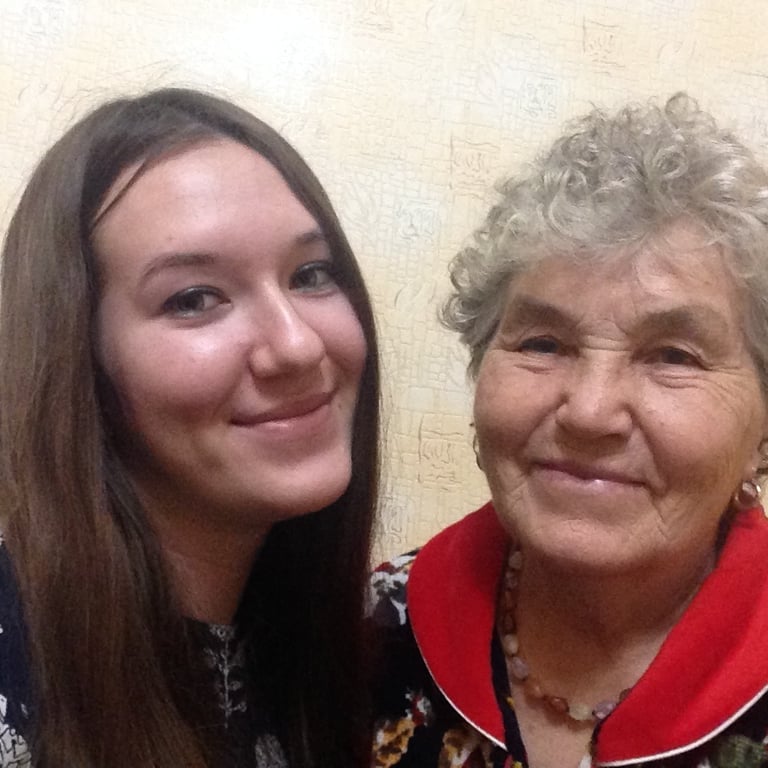
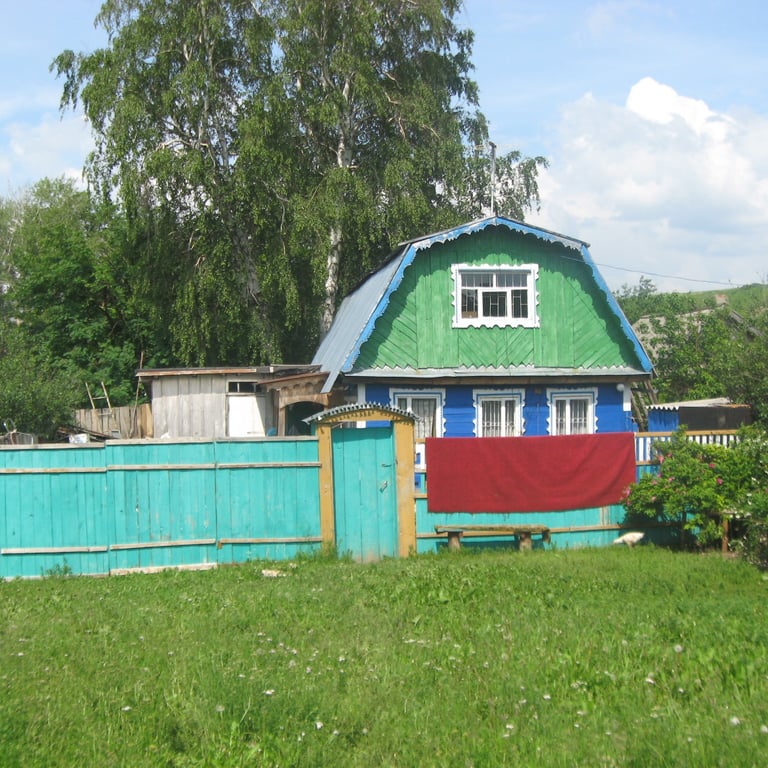
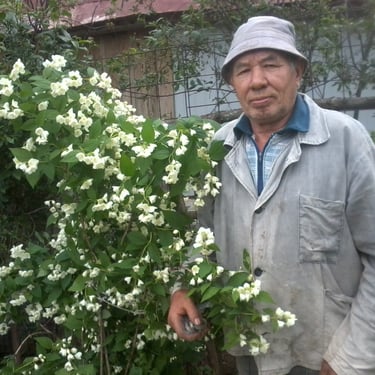
I spent my summers in Russia, at my grandmother Hatima's summer house. She and my grandfather escaped the busy city of Kazan to a little Tatar village, where Hatima grew up, so they could garden. Their garden stretched out in every direction; it was rows and rows of potatoes, beets, carrots, and turnips. My grandparents never gardened just as a hobby; a garden was always hard labor for them.
My grandmother was born into a country still pulling itself from the wreckage of the Second World War. She grew up in a time when food was scarce. Then, she lived through decades of Soviet rule, through shortage and uncertainty, and then through the collapse of that government and through the chaos that followed.
Through all of it, the garden was a source of stability, as they knew that at least they would have something to eat. My grandfather and she worked it together, every year, without fail. They grew mostly root vegetables, but the garden was fairly diverse. Things that could be stored through the long winter in a cellar were a priority. Potatoes, beets, carrots, onions: sturdy crops that provide the most calories were planted in abundance. The garden was an answer to a question that had haunted her generation: What happens if everything falls apart again? So they grew what they needed and preserved what they could.


A Garden That Didn't Need to Exist
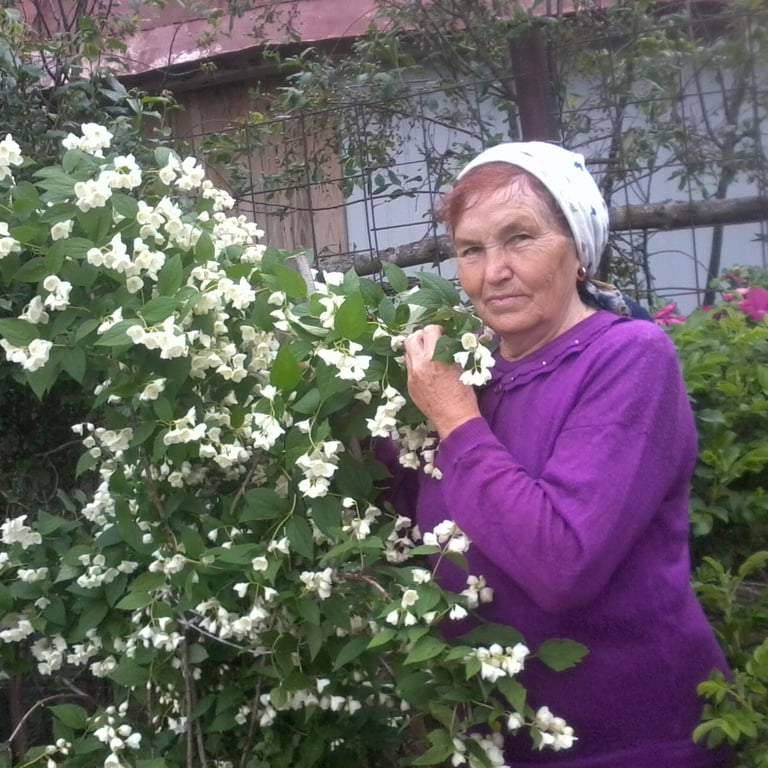
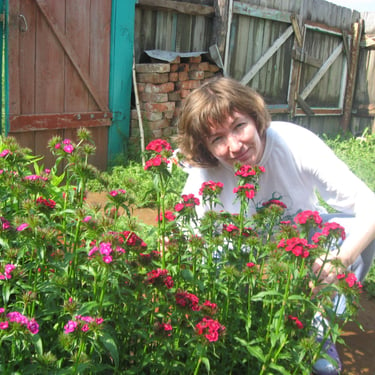
However, despite having to work very hard in the garden, my grandmother found time to plant flowers. She had gigantic sunflowers that towered over me when I was small; ruffled peonies in all the possible shades; several rose bushes; bright orange marigolds; gladiolus that she would make bouquets with for us to take back to the city as we returned for school. Also, phlox in clouds of purple and white, asters with their pointy, sharp petals. None of these flowers fed anyone; they couldn't be stored in a cellar or be pickled, or be rationed through February. They had no objective value, no practical purpose, no survival function, no justification in the strict economy of a life built around making sure there would be enough.
My grandmother grew them anyway because they were beautiful and because she wanted to. She knew that one cannot just survive on potatoes from a cellar; one needs beauty. The beauty matters! Something doesn't need to be useful to be necessary. A woman who has lived through war and collapse and uncertainty has every right to spend her time and her labor on something that exists for no other reason than to make her happy. I loved this about her.

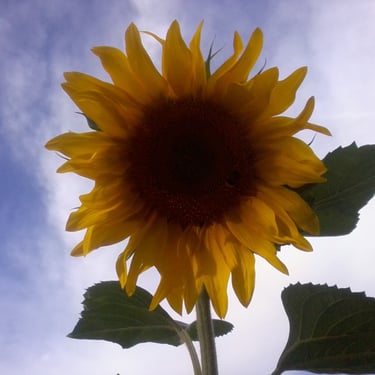
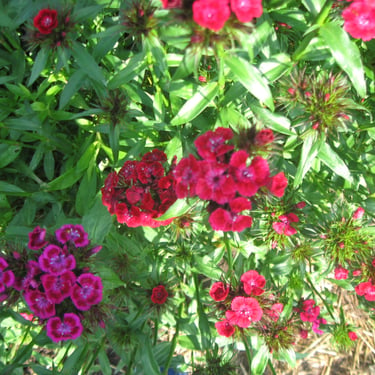
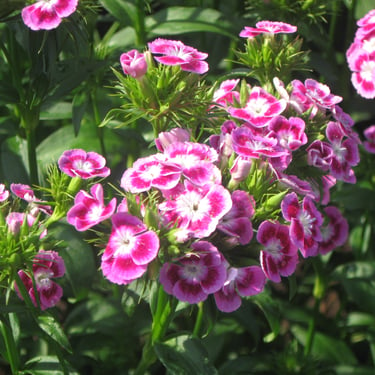
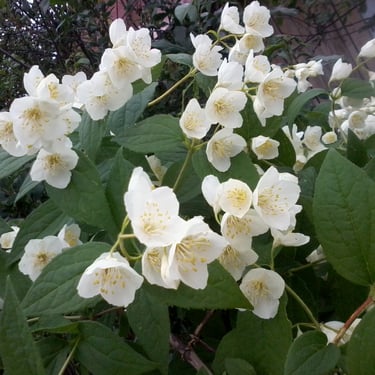
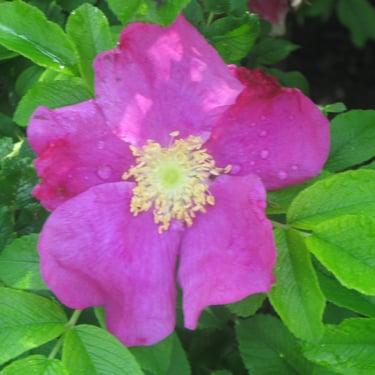
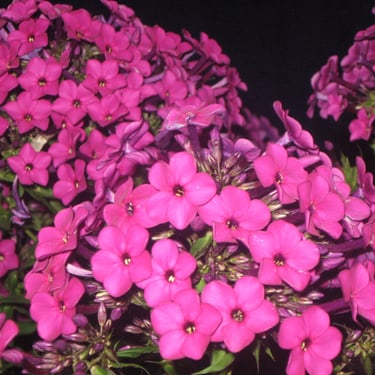
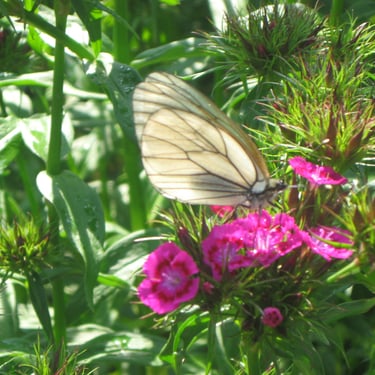
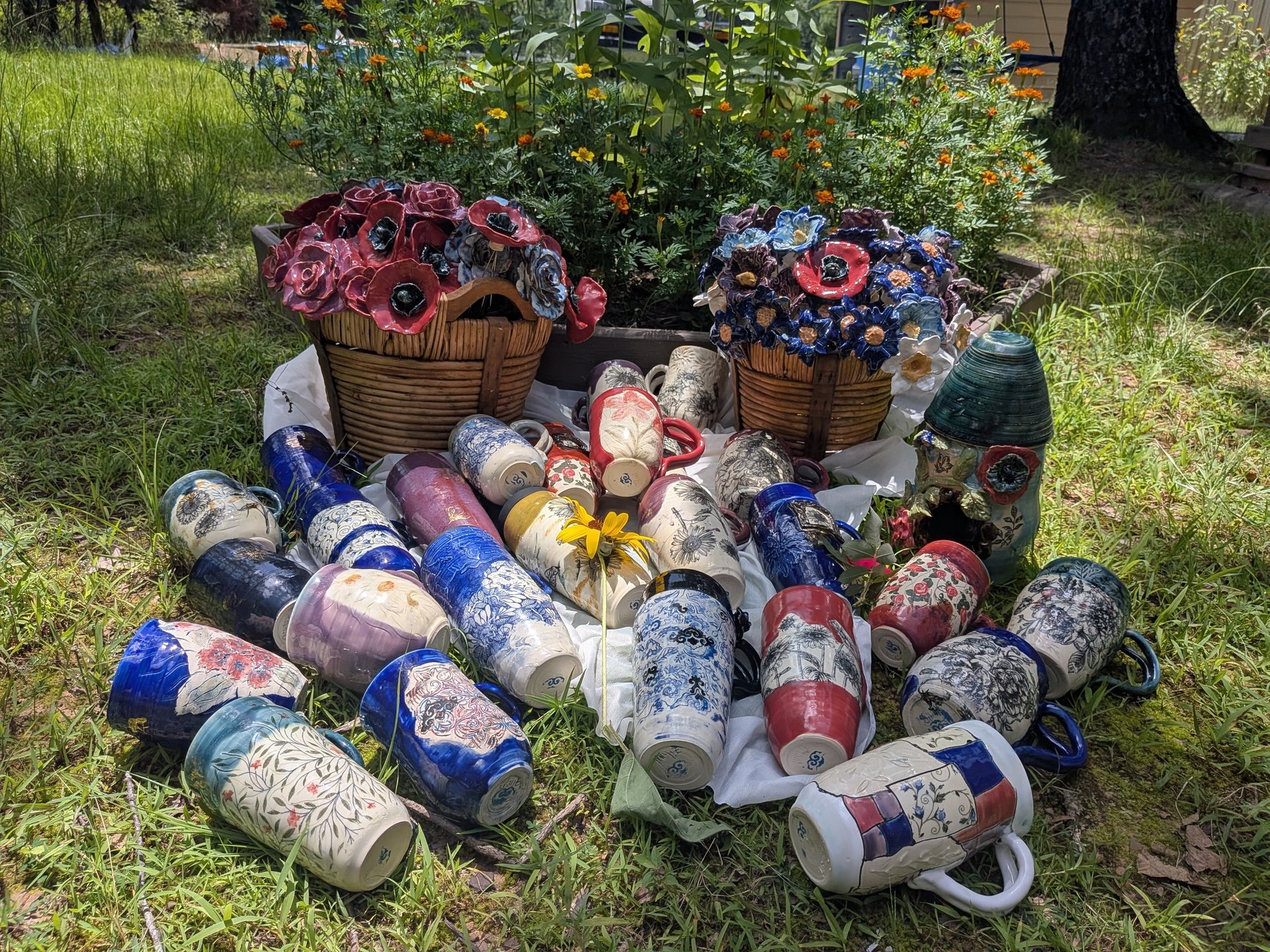
This year's summer collection is named for her. "Hatima" is a limited series of 26 handmade mugs, each one a reflection of the flowers that grew in my grandmother's garden.
I made this collection using several different ceramic techniques. In the sections that follow, I'll walk you through each technique, show you the pieces, and tell you a little about why I made the choices I did.
But at its heart, this collection is simple. It is about a woman who had every reason to be practical and who chose, again and again, to also be joyful. It is about flowers that served no purpose except to be loved. I hope you'll find one that you want to bring home.
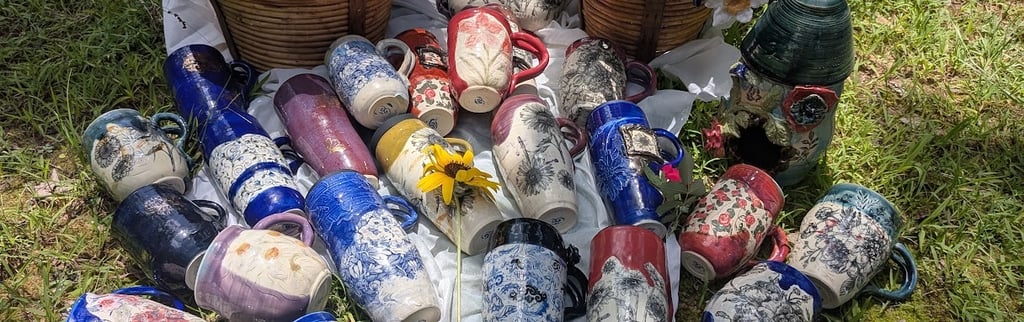
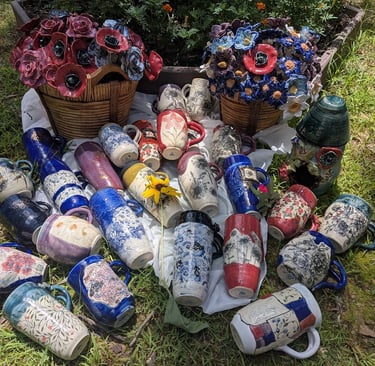
The Collection — Technique by Technique
Silk Screen Printing
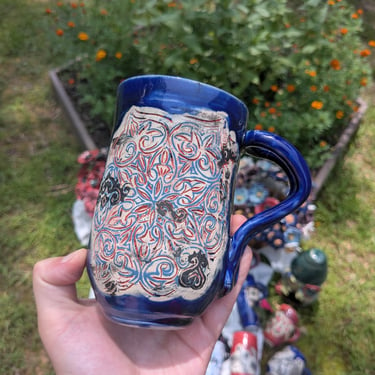
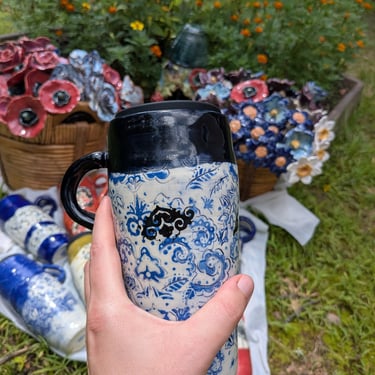
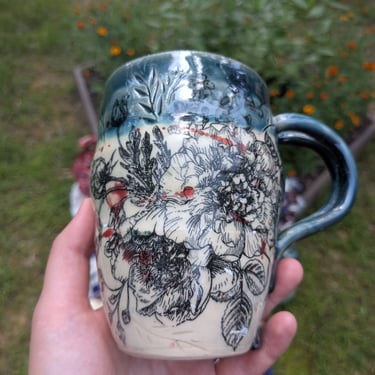
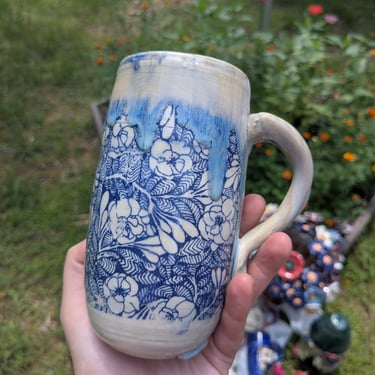
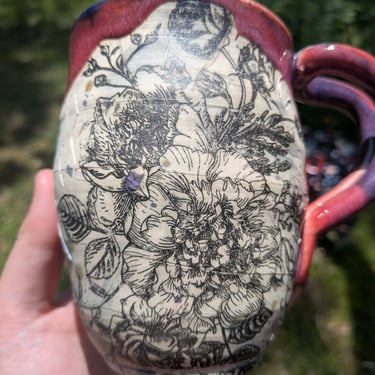
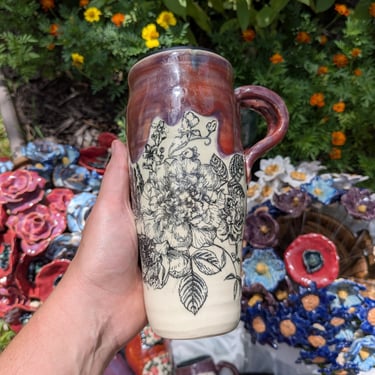
To translate traditional patterns onto clay, I turned to silk screen printing. In ceramics, this involves pressing underglaze through a fine mesh screen directly onto the clay surface. It creates crisp, intricate lines that retain a lovely tactile texture. For these pieces, I printed classic Tatar floral designs.
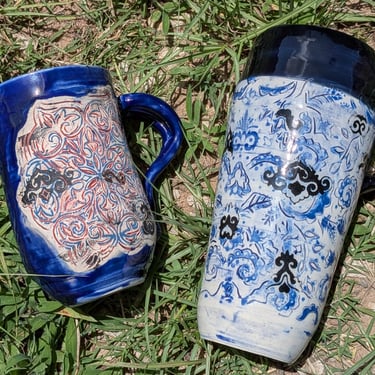
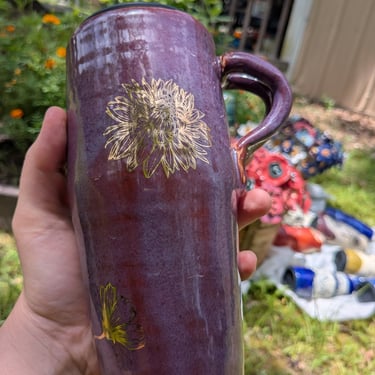
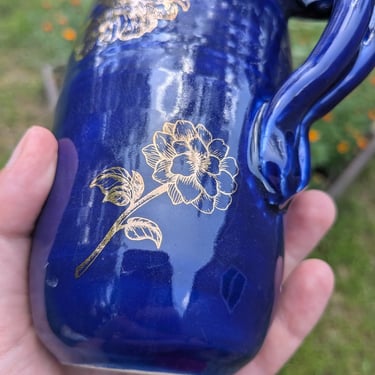
Gold Luster
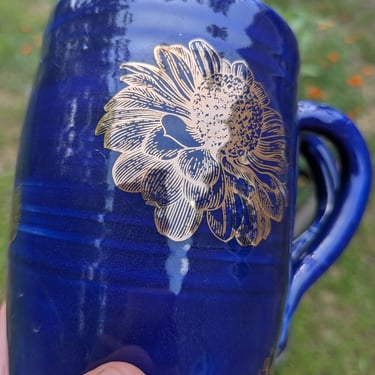
After the initial glaze firing, a real gold transfer is carefully painted onto the smooth surface. The mug goes back into the kiln for a lower-temperature firing, burning away the liquid and leaving behind a golden floral image.
Watercolor Underglaze Painting
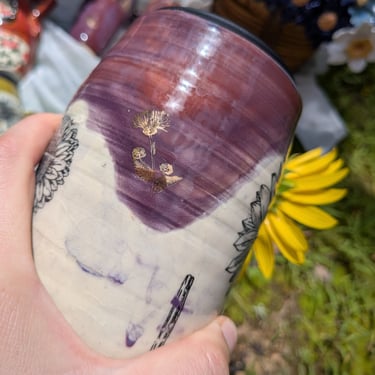
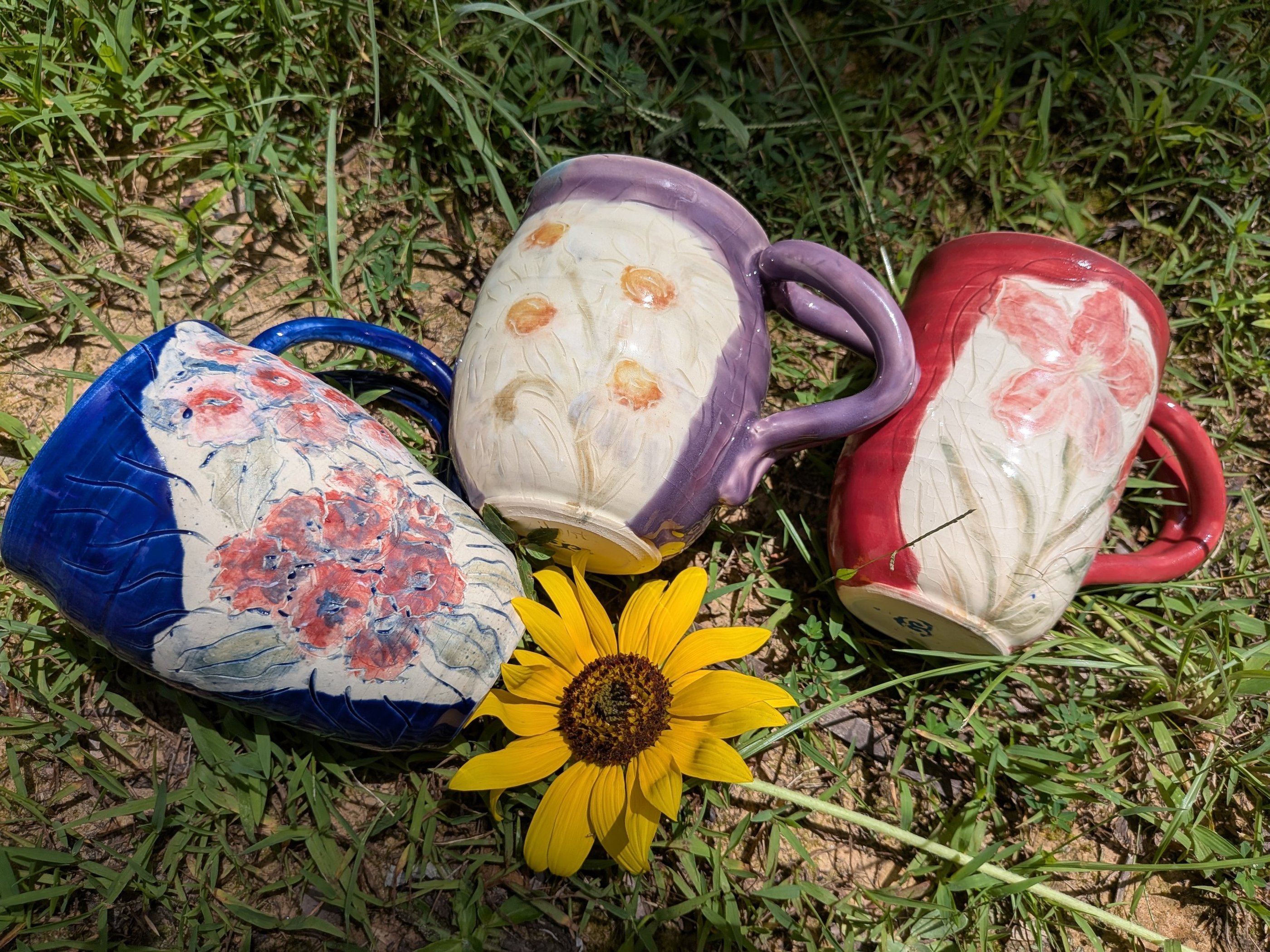
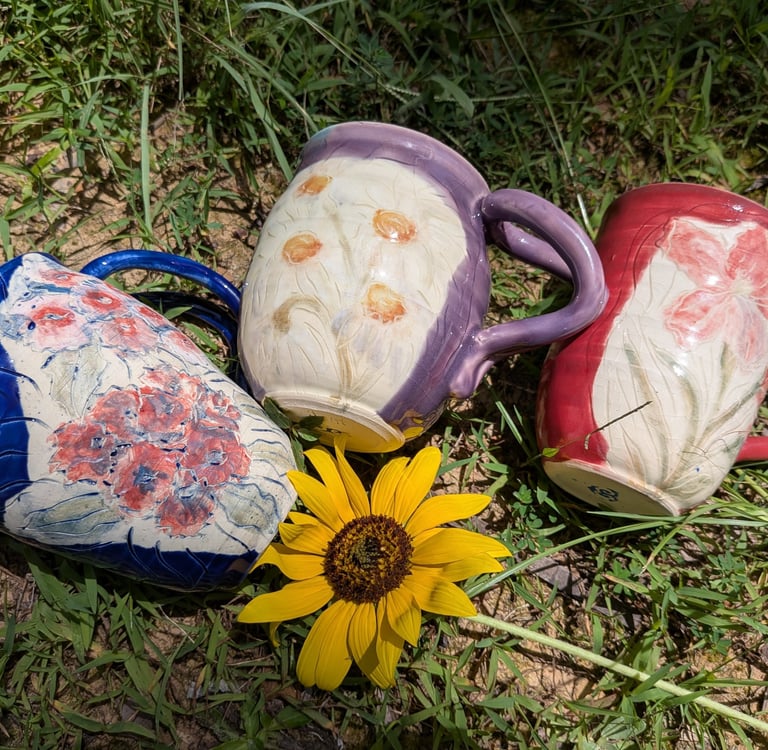
Phlox, daisies, and gladiolus mugs were made in watercolor technique. I painted with dried underglaze by hand onto bisque-fired clay. I thinned the colors with water to build up soft, layered washes.
Underglaze Transfers
Roses, peonies, and sunflowers mugs were made with underglaze transfers. Designs printed onto special transfer paper with ceramic pigments are pressed onto the unglazed clay, much like a temporary tattoo. A final clear glaze locks it in forever, ensuring the vibrant designs won't wear down with daily use.
Mishima
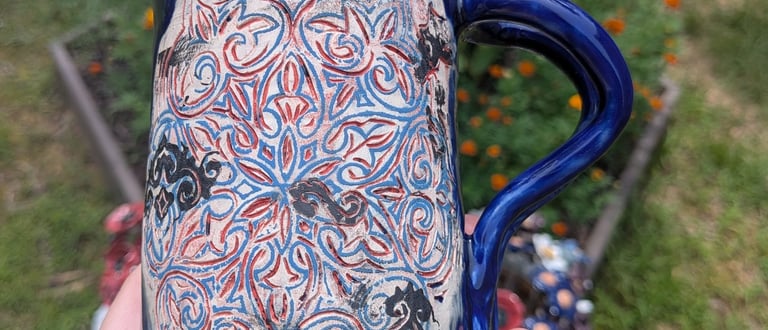
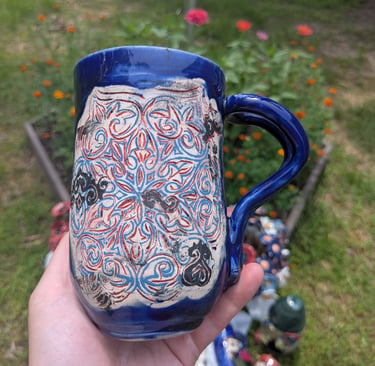
Mishima is an ancient inlay technique. While the clay is still leather-hard, I carve fine lines into the surface. I then fill those tiny channels with a contrasting underglaze. Once the mug dries slightly, I wash the surface with a sponge, revealing clean inlaid lines.
Rice Pottery
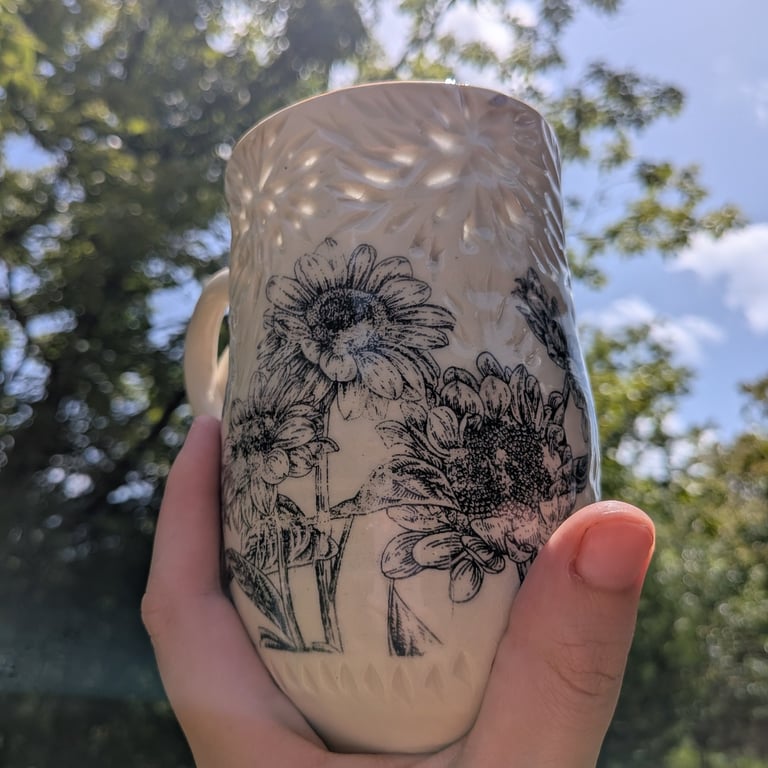
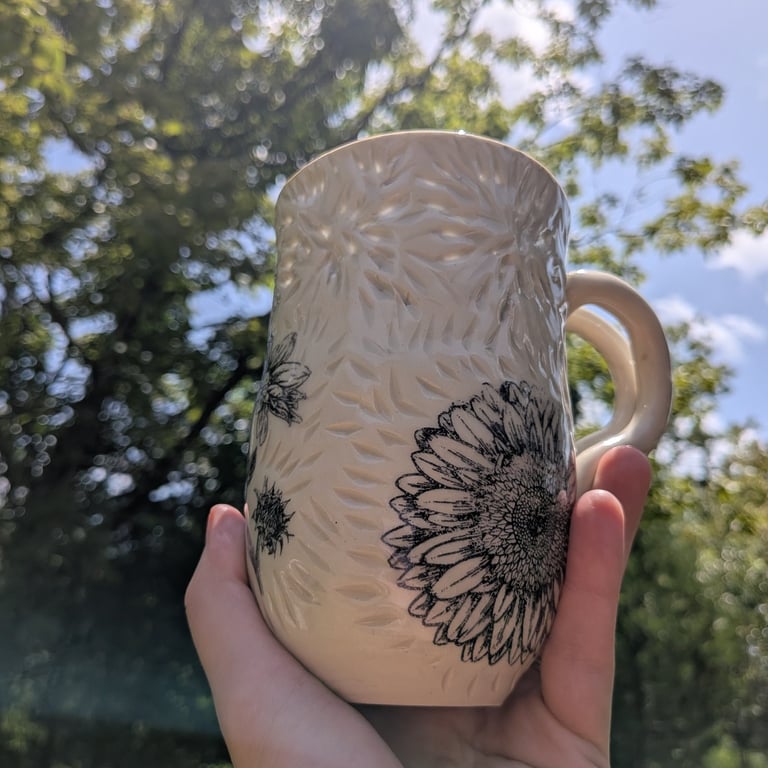
One of the most magical methods in this collection is the rice pottery technique. Before the clay is fired, I carve small perforations directly through the walls of the mug. I then fill those tiny openings with a clear glaze. During the firing, the glaze melts into miniature glass windows. The holes are entirely sealed, making the mug completely watertight, but when light hits the ceramic, it shines right through the walls like sunlight filtering through sunflower petals.
Sculpting
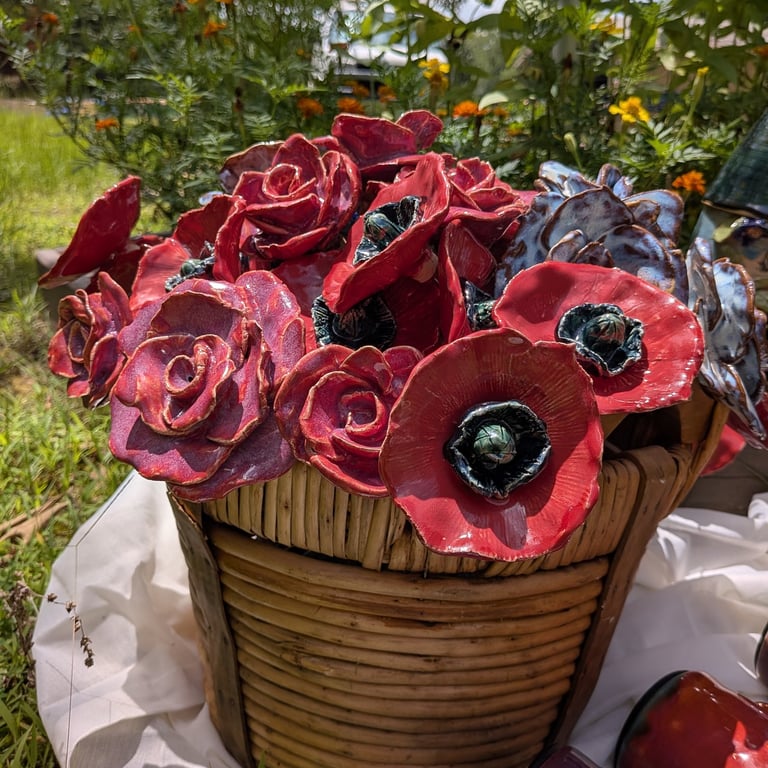
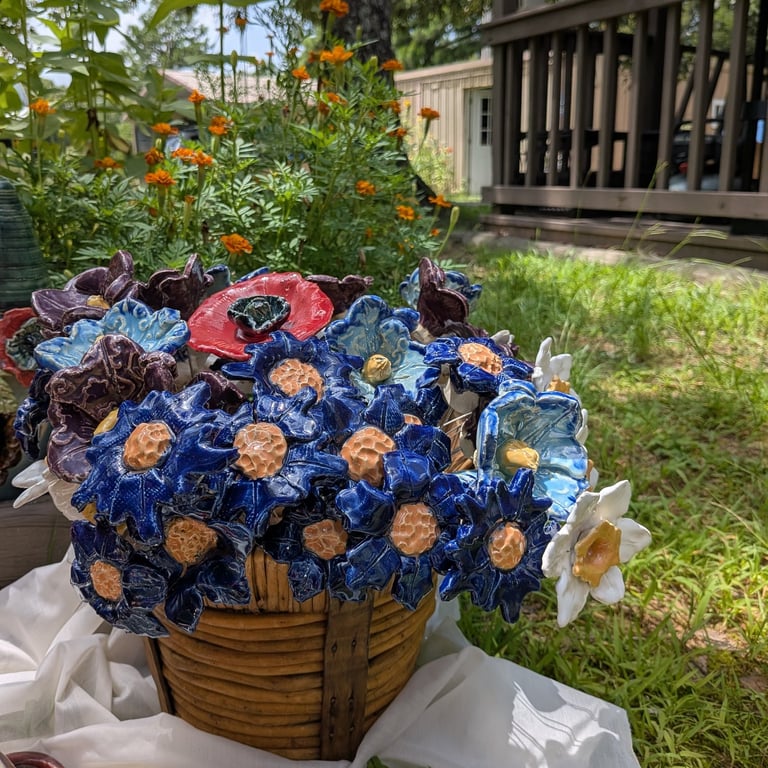
Beyond the mugs, I wanted to create pieces that could live directly alongside your real plants. I hand-sculpted individual ceramic blossoms, including roses, asters, daffodils, poppies, and Tatar tulips. Historically, the Tatar tulip is a two-dimensional motif used in traditional embroidery and leatherwork. I reimagined it here as a fully three-dimensional flower. Each sculpted piece is mounted on a sturdy metal stake, so each flower could be put in a flower vase or added directly in your garden bed. If left outdoors, the open blossoms even catch tiny drops of morning dew, doubling as little bath spots for visiting bees.
Looking at these 26 pieces sitting in my kitchen, I see my grandmother's wisdom. A life filled only with winter storage and root vegetables isn't fully lived. A mug is a humble thing. We hold it in our hands during our morning routine, feeling its warmth as we sip our tea or coffee before the rush takes over. I hope that holding one of these pieces serves as a gentle daily reminder: you do not always have to be productive. You do not have to justify everything you do by its practical value. You are allowed to welcome beauty simply because it makes you happy.
The "Hatima" series is strictly limited to these 26 handmade mugs, each unique. Once this small summer run is gone, it won't be remade. I hope you find the flower that speaks to you, and that it brings a little bit of Hatima’s quiet joy into your home.