
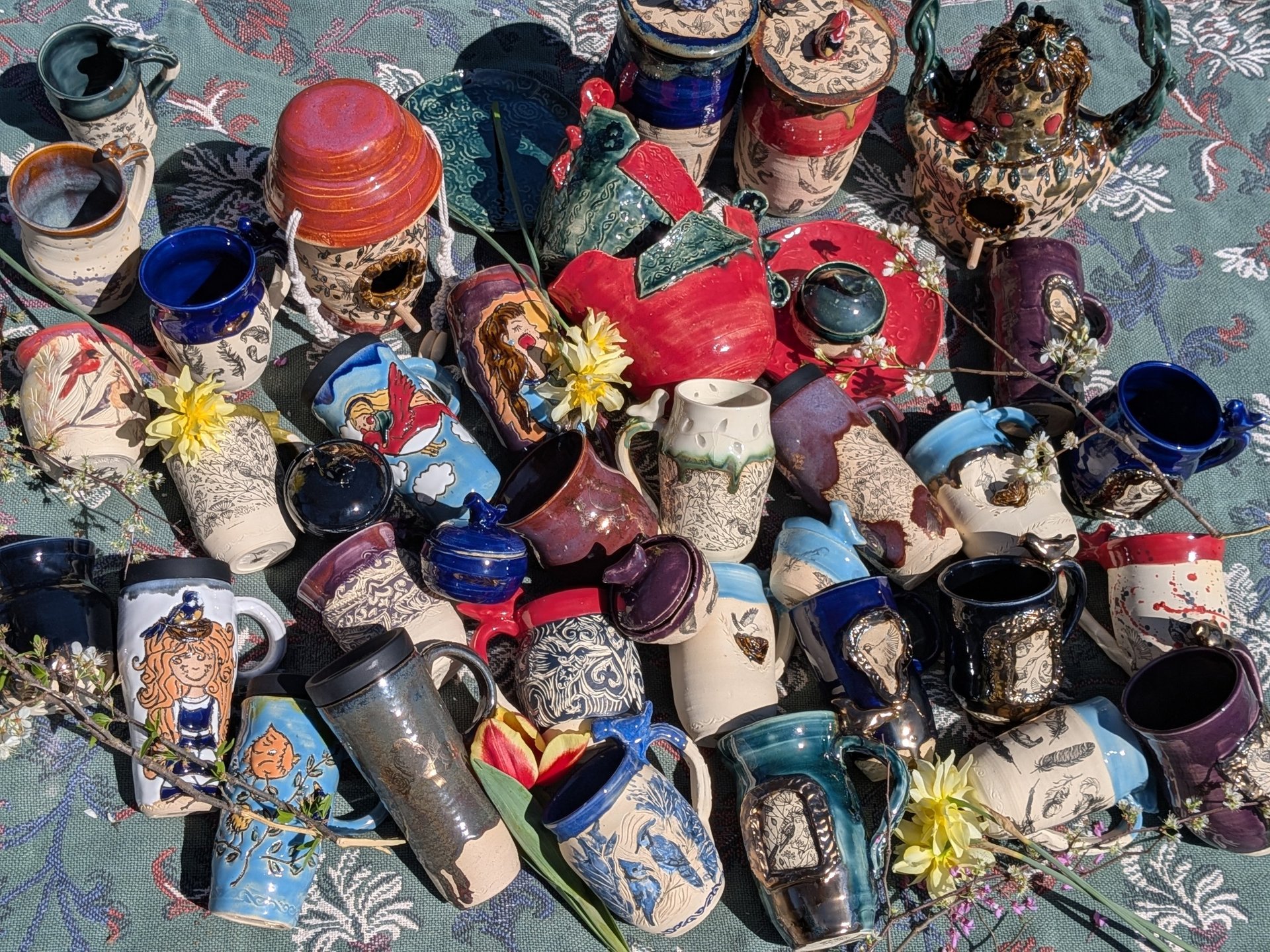
The “Sanduğaç” "Spring Pottery Collection
Celebrate the arrival of spring with “Sanduğaç”, a pottery collection named after the Tatar word for nightingale.
3/20/20265 min read
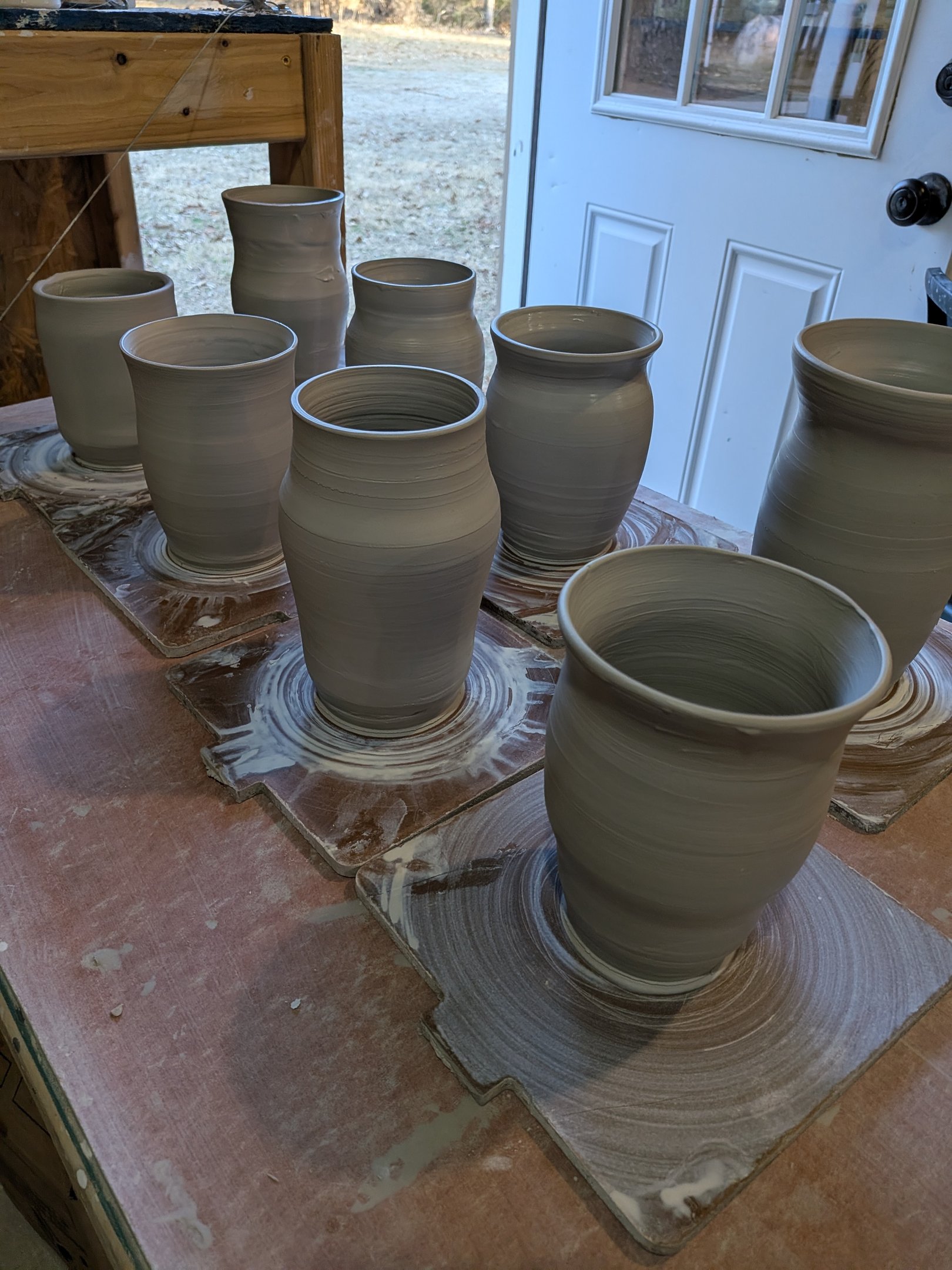
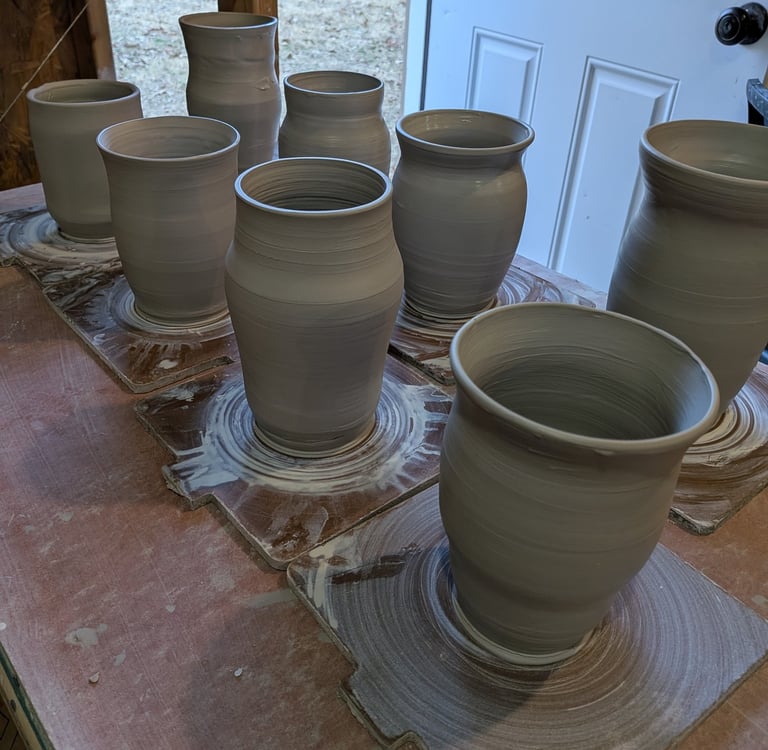
I am so excited to finally share my latest pottery release with you! This collection feels like a major milestone in my journey as a potter. If you’ve been following my work, you’ll notice some big changes. The biggest one is that I have started throwing with porcelain.
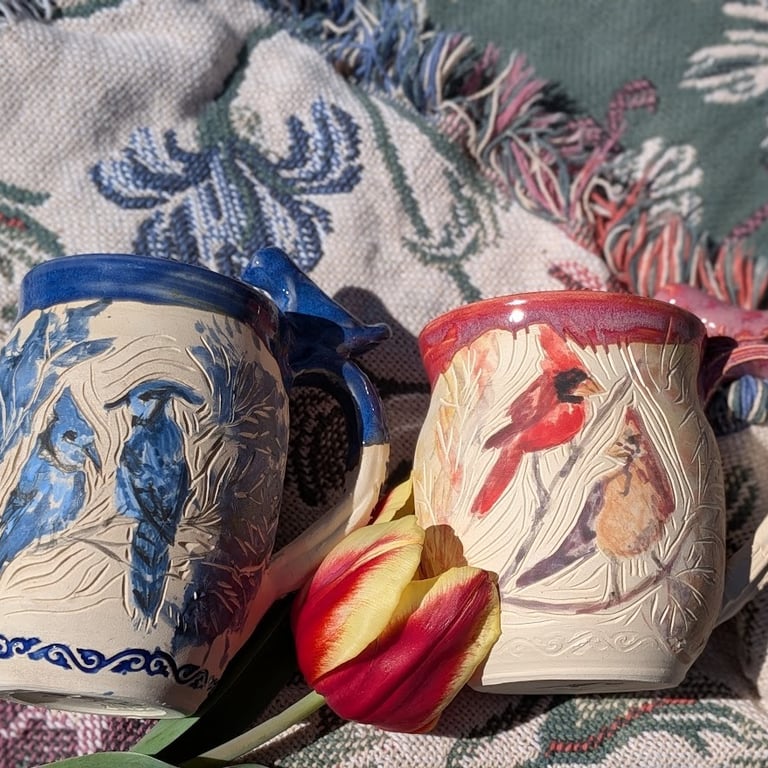
There is a certain magic to porcelain, as its smooth, crisp surface has allowed me to push my designs further than ever before. From hand-painted watercolor Bluejays to delicate "rice grain" carvings that let the light shine through, porcelain has been a faithful canvas for it all.
Birds, birds, birds...
Birds have always been my muse for this collection, as it is always the birds for me that signal spring coming after a long winter. There is one bird in particular that carries a deep, personal significance: the Sanduğaç. In Tatar culture, the Sanduğaç (the nightingale) is a powerful symbol of love, longing, beauty, and the soul’s voice. It is often celebrated in folk songs for its enchanting melody that breaks the silence of the night, representing a persistence of spirit even in solitude. I tried to capture that in my pottery this season.
Experimenting with underglaze and golden overglaze transfers
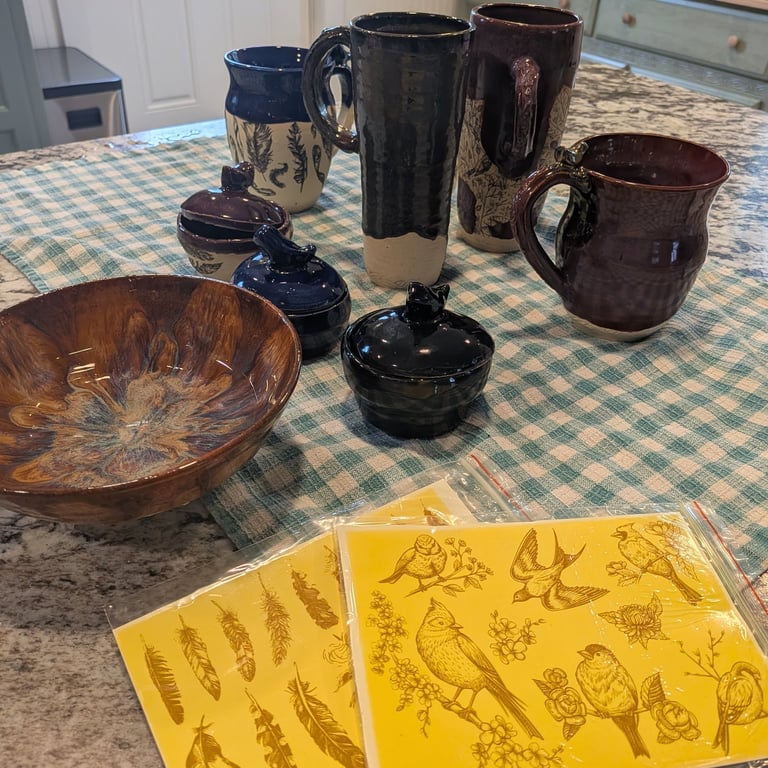
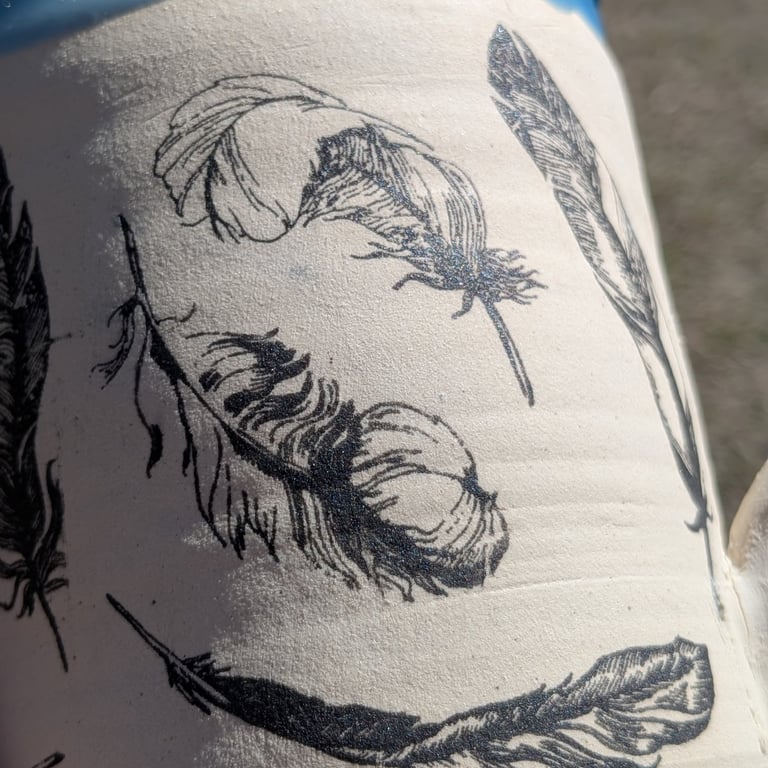
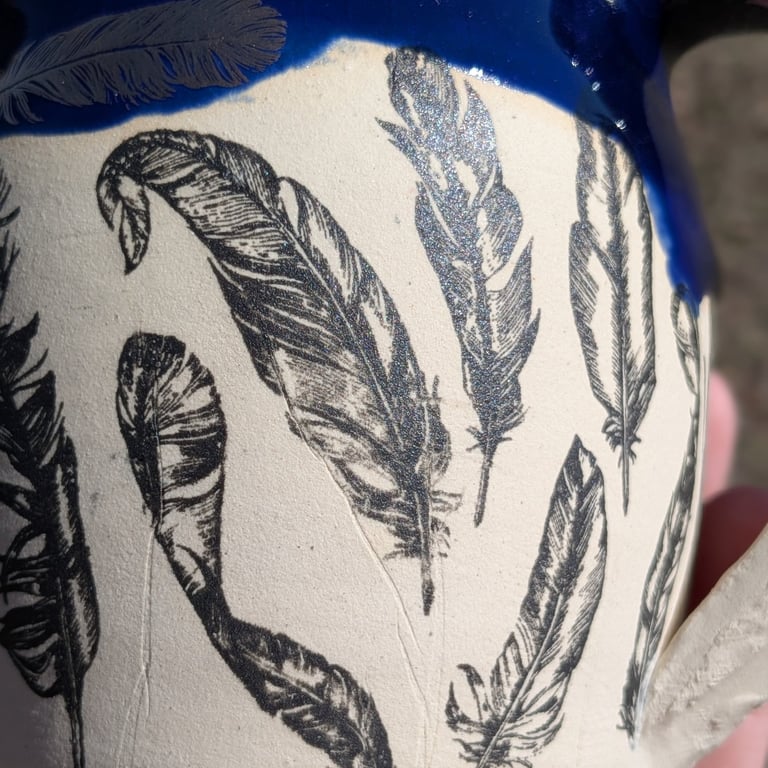
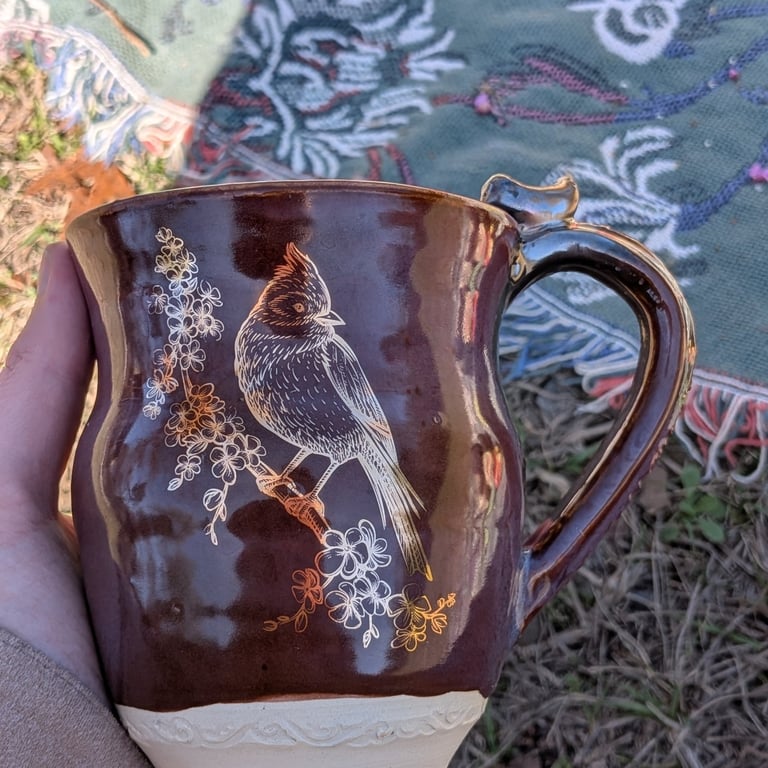
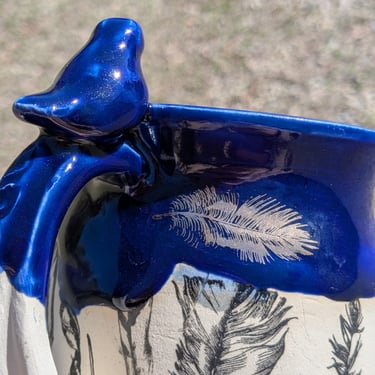
The intricate details you see across this collection, from the delicate feathers to the soaring birds, are achieved through the art of ceramic transfers. I use two different types. The underglaze transfers are applied early in the process, before the initial bisque firing. These designs come on thin, specialized sheets of paper that I carefully press onto the damp clay to "print" the image directly into the surface. Once the piece has been glazed and fired a second time, I add the final touch: gold overglaze transfers. These are applied over the smooth, finished glaze and then fired a third time in the kiln. This extra step permanently bonds the gold to the surface, creating that brilliant, metallic shimmer that catches the light whenever you take a sip.
Rice grain pottery
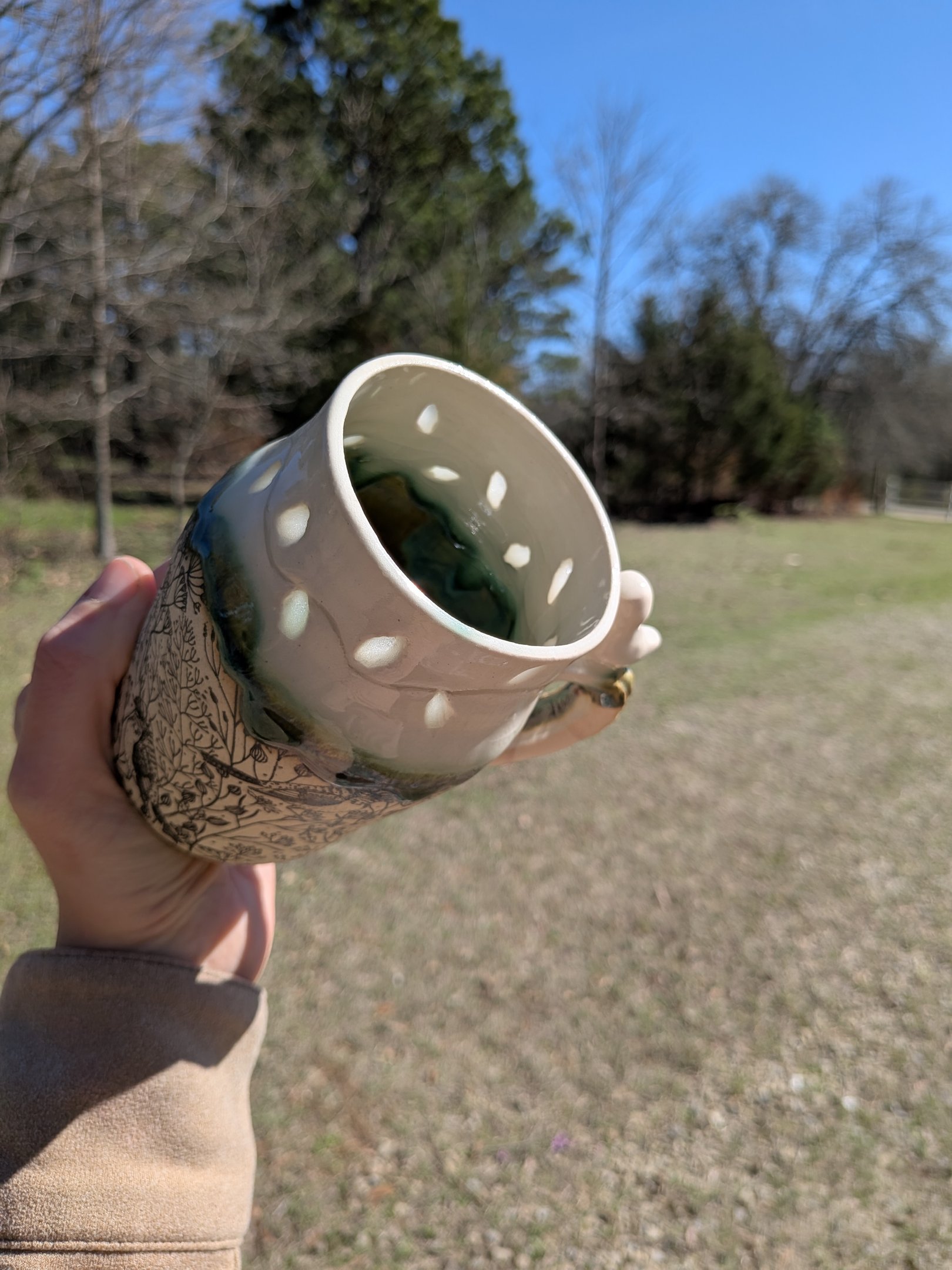
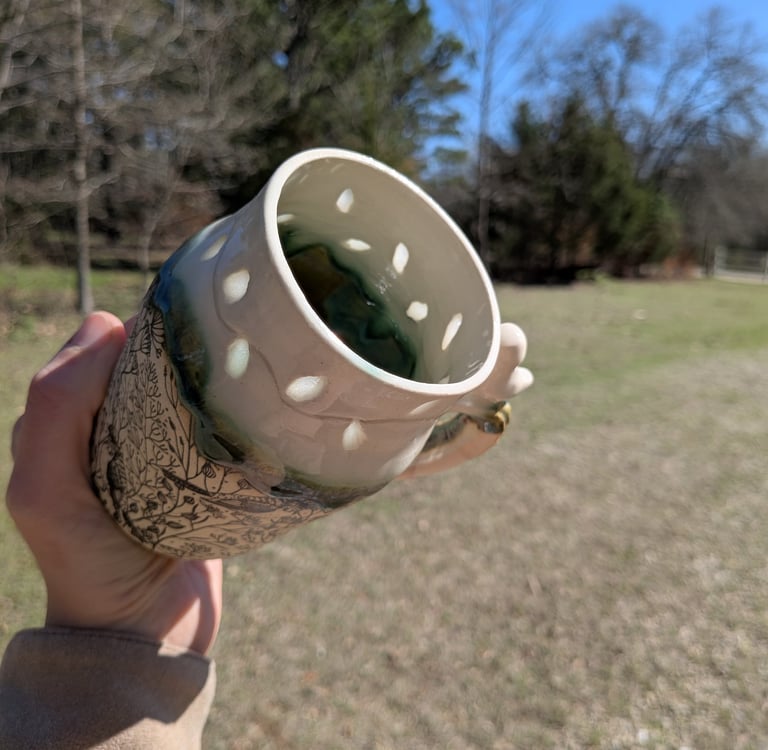
The rice grain technique is a delicate process that I’ve recently begun exploring with my porcelain pieces. To create this effect, I carefully carve small holes directly through the walls of the leather-hard clay, forming the shape of winding vines. After the initial firing, these "grains" are filled with a clear glaze that, once vitrified in the kiln, transforms into tiny windows of translucent glass. When you hold it up to the light, the sun shines right through the walls of the vessel, illuminating the intricate patterns and highlighting the lightweight nature of the porcelain itself.
Watercolor Underglazes
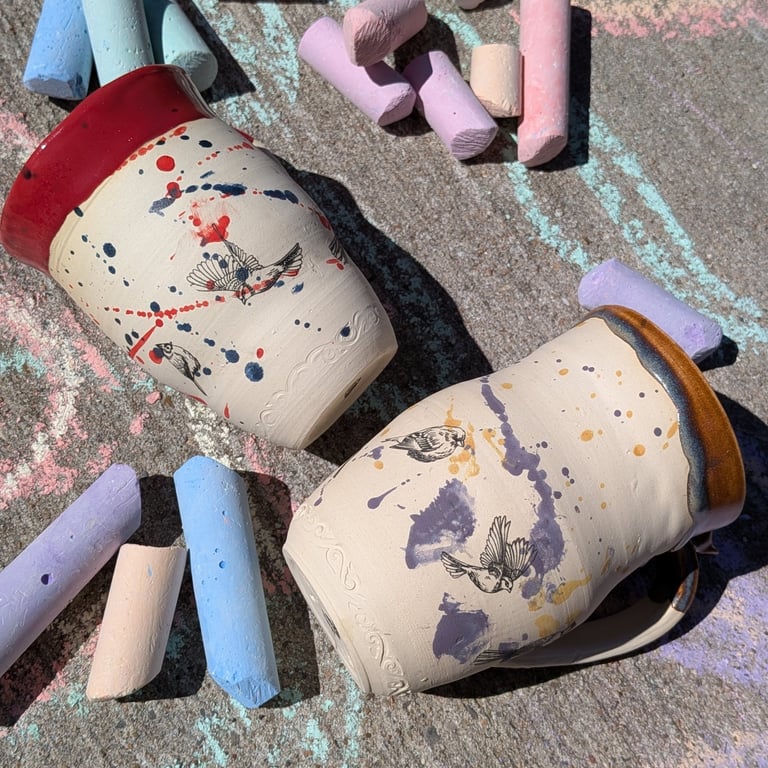
The Watercolor Porcelain series is a celebration of the unique "canvas" that porcelain provides. I dried out my liquid underglazes in a watercolor palette. Using these, I hand-paint each bird using soft brushstrokes that mimic the look of a traditional watercolor painting. Because porcelain is so smooth before firing, it allows these vivid colors to glide on effortlessly and stay exceptionally bright. It is especially noticeable in my Splash of Color mugs, where I splashed my underglazes on the surface of the mugs. They have stayed very bright after two firings.
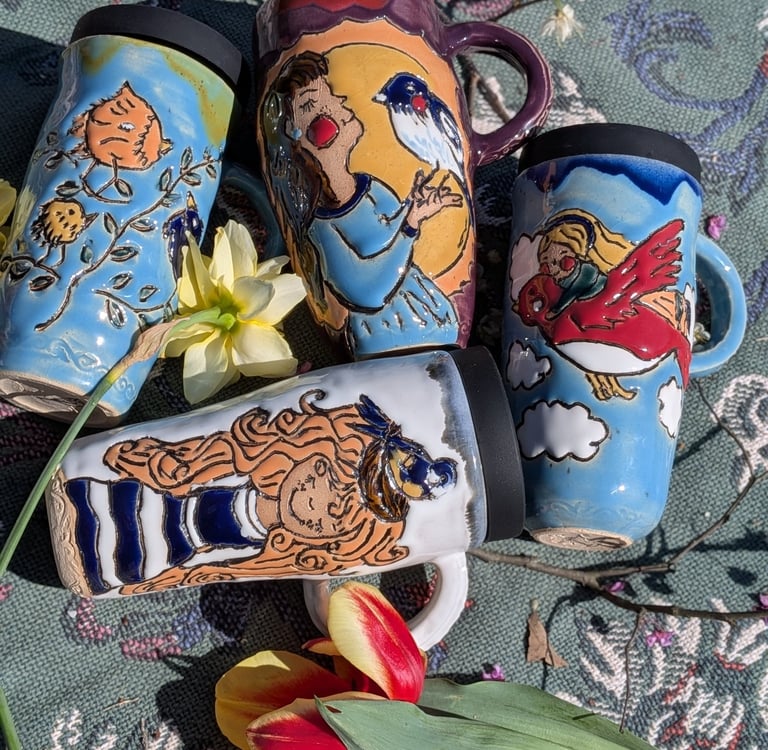
Cuerda seca
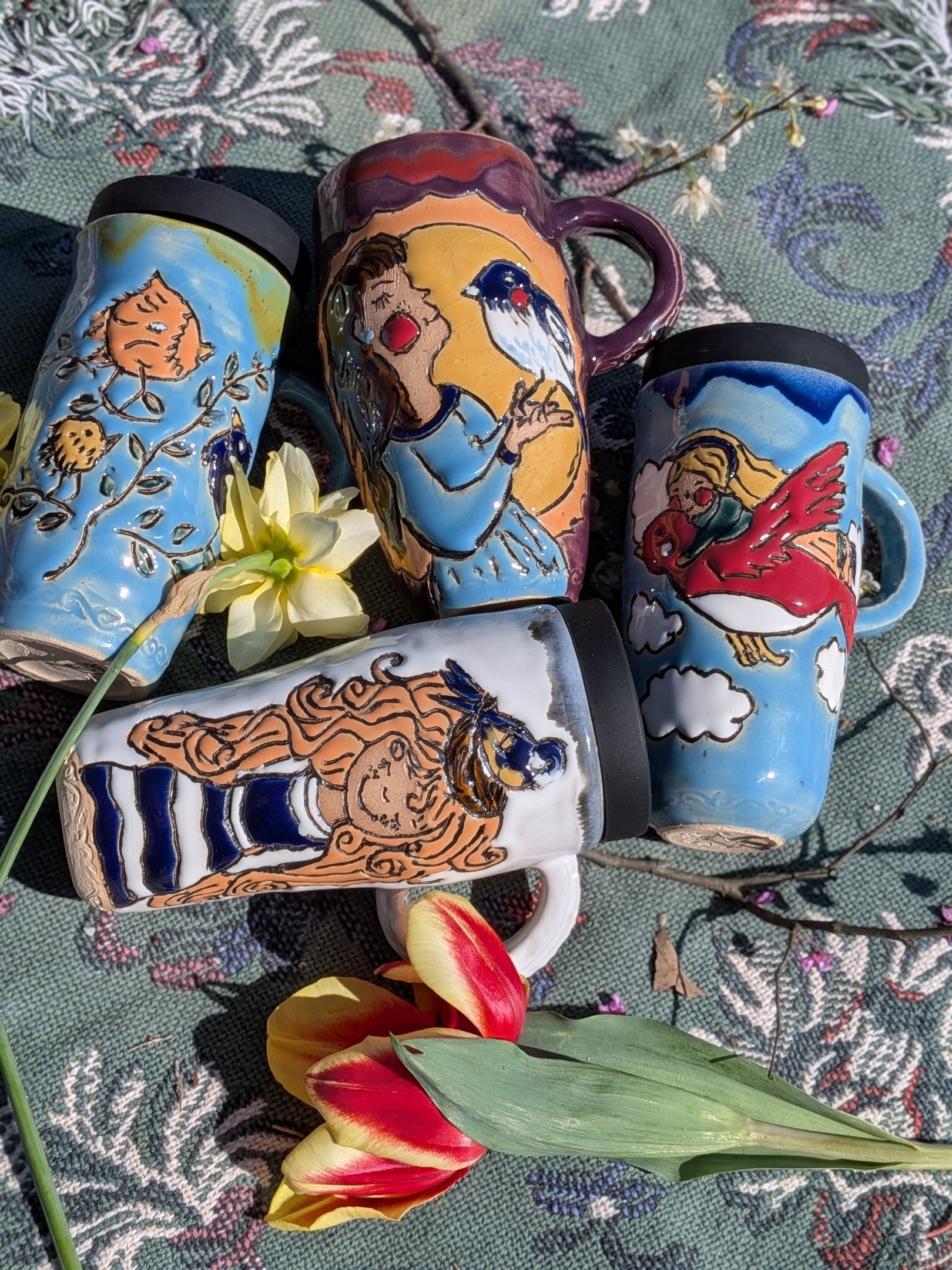
The Cuerda Seca technique has been a cornerstone of my work for a long time, but this collection marks a significant breakthrough in how I approach it. For years, I achieved a similar look by painstakingly painting borders with black underglaze, but applying the final glazes with squeeze bottles was always a high-stakes challenge, since the glaze would often spill over the borders, blurring the crisp lines I worked so hard to create. This time, I’ve discovered the use of black wax. By drawing the design with this specialized wax, I create a natural, water-repellent barrier that holds the glazes exactly where they belong. It gives the pieces a stained-glass appearance without the constant worry of them bleeding into one another.
Sgrafitto
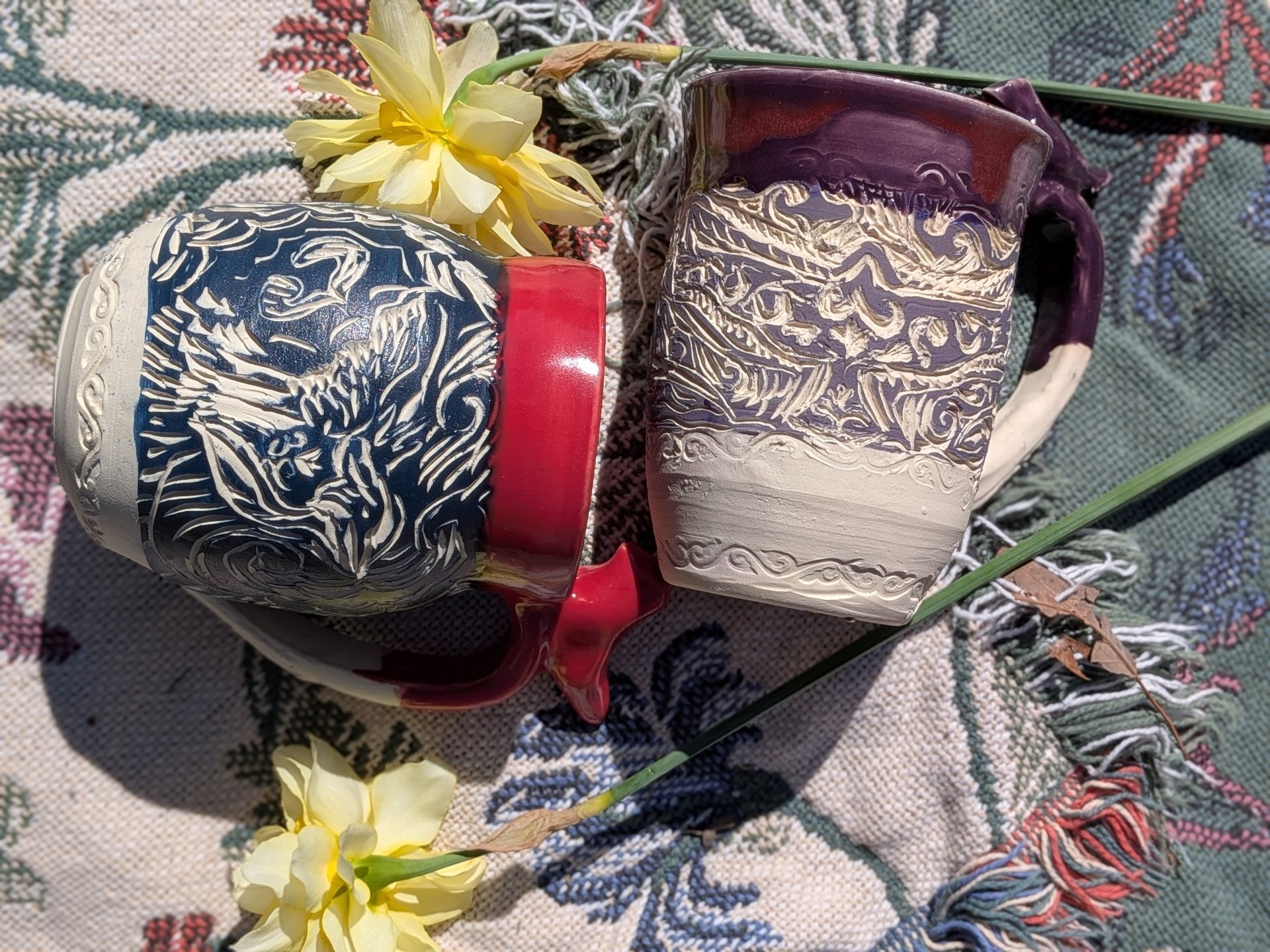
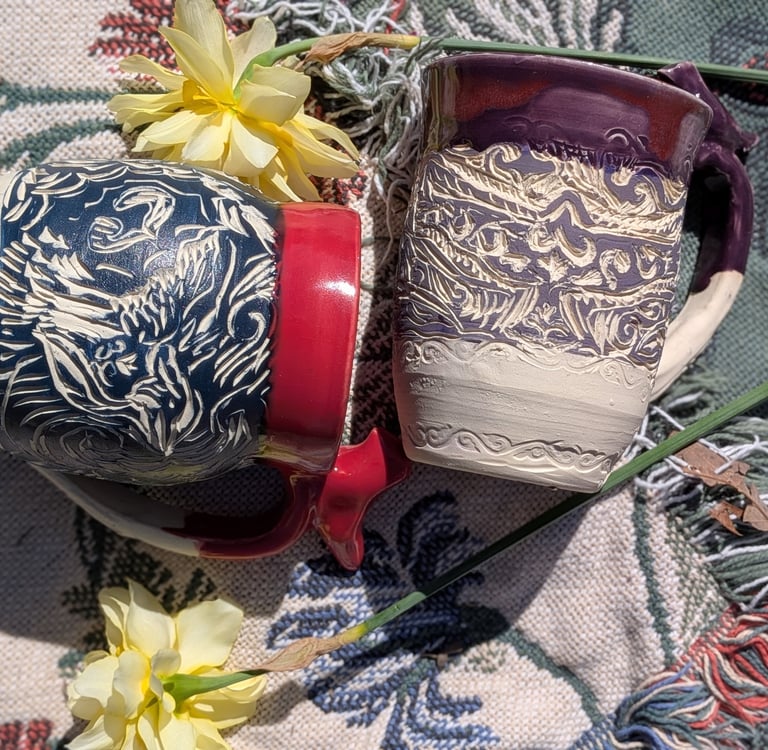
The Sgraffito technique is one of the most meditative parts of my process. The word comes from the Italian sgraffire, meaning "to scratch," and that’s exactly what I do. I cover the leather-hard porcelain with a layer of deep blue or rich purple underglaze, and then, using a fine carving tool, I carefully scratch away the pigment to reveal the light clay body beneath. This creates a high-contrast effect where every line and texture of the birds' feathers or the eagle’s wings comes to life. It’s a slow process that leads to no two pieces ever being exactly alike, as each stroke of the tool leaves a permanent mark on the clay.
Macrame
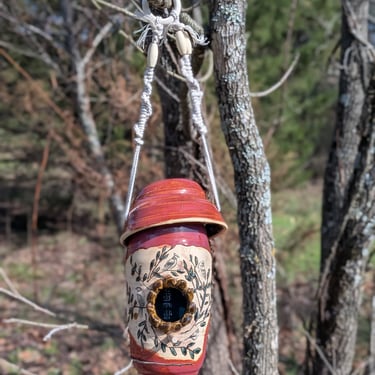
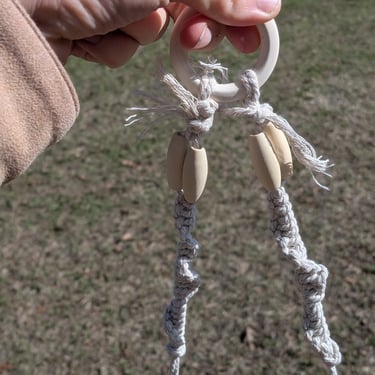
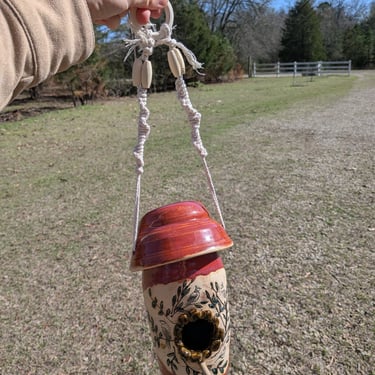
Incorporating macrame into my ceramic work has been such a rewarding way to blend two distinct handmade worlds. I included a macrame hanger for my ceramic birdhouse. I thought that the cords looked nice in combination with stoneware.
Throwing closed shapes
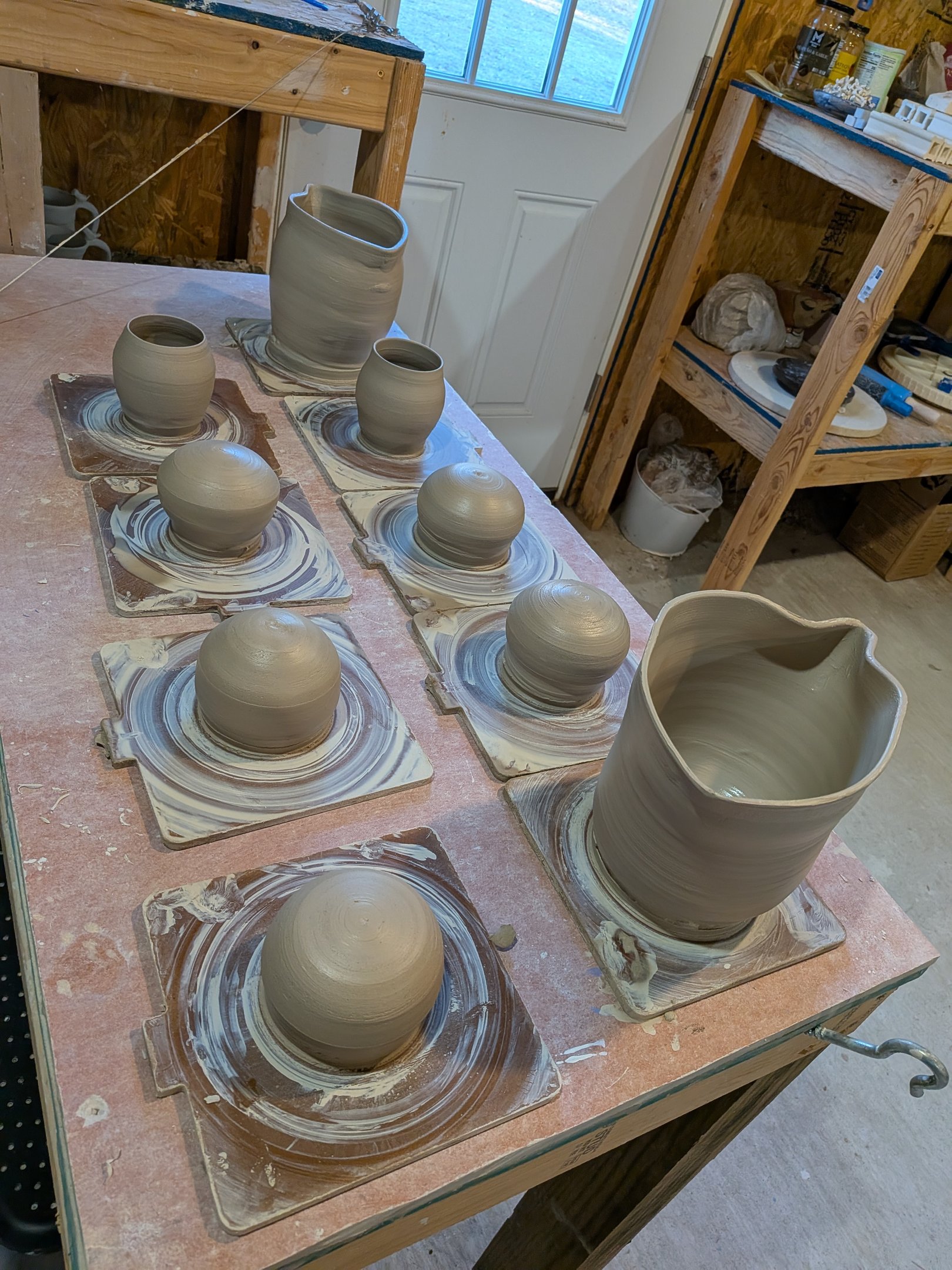
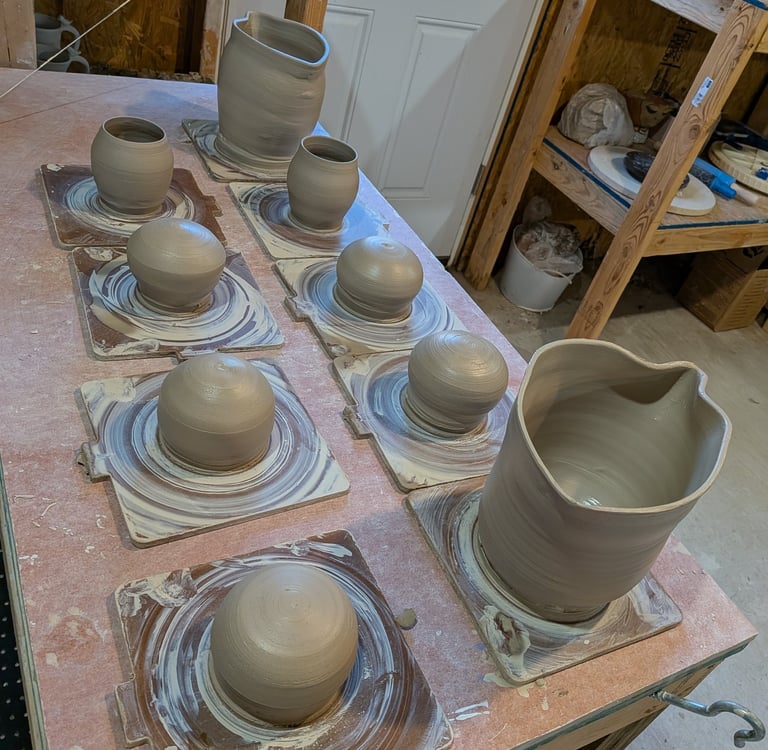
One of the most satisfying throwing challenges in this collection was throwing the closed shapes for my jewelry jars. There is lots of focus required to pull the clay inward until the form completely seals, trapping a pocket of air inside that supports the walls while I refine the curves. While I’ve experimented with closed forms before, this was my very first time cutting them in half to create a fitted lid.
Sculptural work
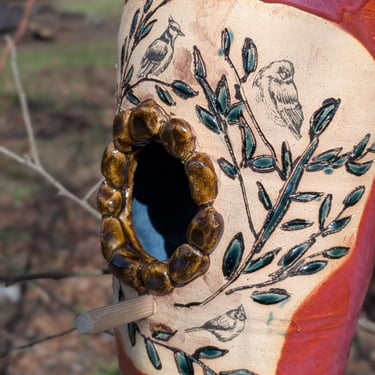
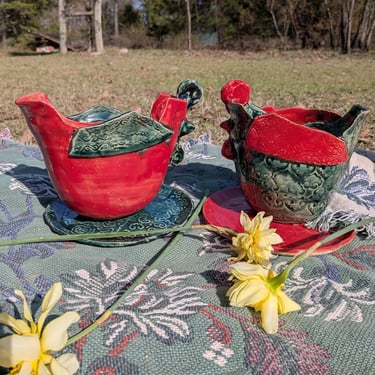
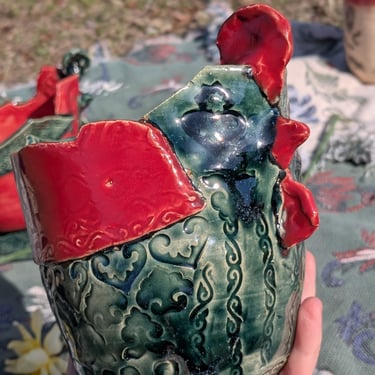
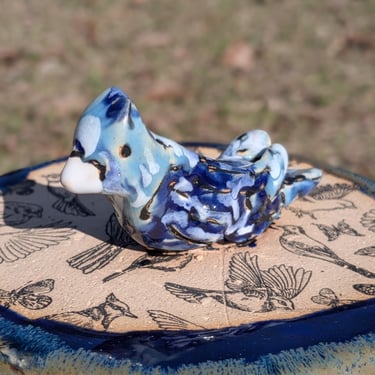
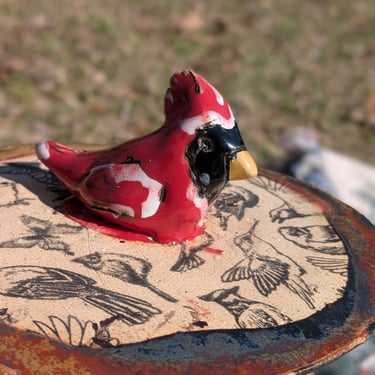
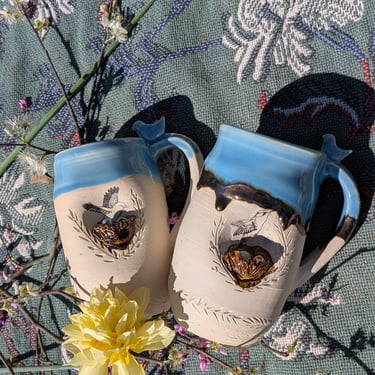
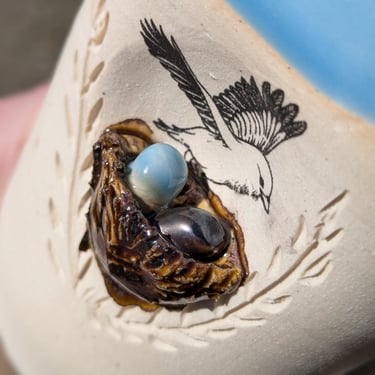
This collection also marks a deeper dive into sculptural work. You’ll notice that most of the cups in this release feature a small, hand-sculpted bird perched right on the handle. For the Coffee Jars, I scaled up this sculptural element, creating a Bluejay and a Cardinal to serve as functional, artistic knobs for the heavy stoneware lids. I have also hand-sculpted ornate frames and attached them directly onto the surface of several mugs. Brushing these frames with a bright golden glaze creates a gallery-like feel, turning each piece of pottery into a permanent home for a tiny bird. Two of my other porcelain mugs have nests with eggs, which have also been sculpted by hand. Rooster planters involve some sculpting as well, as I have thrown them on a wheel, and then reshaped and cut them with the wire tool, attaching the cut pieces back as wings. The same goes for the birdhouse that has some sculpted rocks around the entrance.
Thank you
Thank you so much for following along on this journey and for letting me share the evolution of my work with you. This collection has been a true labor of love, from the first "aha!" moment with porcelain to the final sparkle of gold overglaze, and it wouldn't be nearly as meaningful without this wonderful community of art lovers. Whether you’re here for the story of the Sandugach or looking for a new favorite morning mug, I hope these pieces bring a little bit of the Springtime joy into your home. I can’t wait to see which ones find their way to you!
Regina Kutuzova
Zilant Pottery